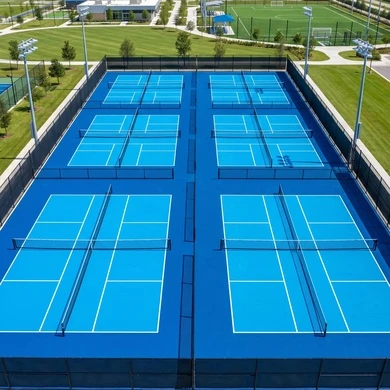
As pickleball continues to expand across North America, facility owners are faced with an important decision when planning new courts or renovating existing sports spaces: should they choose indoor or outdoor pickleball court flooring?
The answer depends on several factors, including budget, climate conditions, expected usage, maintenance requirements, and player experience. Understanding the differences between indoor and outdoor pickleball flooring can help facility owners make informed decisions and maximize their investment.
Why Flooring Selection Matters
The playing surface has a direct impact on ball bounce, player movement, safety, comfort, and long-term maintenance costs.
A well-designed pickleball court provides consistent ball response, reliable traction, and a comfortable playing experience. Poor flooring choices can result in increased wear, player dissatisfaction, and higher maintenance expenses.
Whether the court is located indoors or outdoors, selecting the appropriate flooring system is one of the most important decisions in facility planning.
Indoor Pickleball Court Flooring
Indoor pickleball courts are commonly found in schools, sports complexes, fitness centers, and dedicated pickleball clubs.
Because indoor courts are protected from weather conditions, facility owners have greater flexibility when selecting flooring materials.
Advantages of Indoor Courts
Consistent Playing Conditions
Indoor environments eliminate the effects of wind, rain, and temperature fluctuations. Players can enjoy predictable ball bounce and game performance year-round.
Longer Flooring Lifespan
Indoor flooring is not exposed to UV radiation, moisture, or extreme weather conditions. As a result, surfaces often maintain their appearance and performance for longer periods.
Better Player Comfort
Many indoor sports flooring systems offer improved shock absorption and comfort compared to traditional hard outdoor surfaces.
Easier Maintenance
Indoor facilities generally require less frequent cleaning and surface repairs because environmental wear is significantly reduced.
Considerations for Indoor Facilities
Indoor projects may involve higher construction costs due to building requirements, lighting systems, ventilation, and climate control. Facility operators should also ensure that flooring materials can accommodate multiple sports if the space will serve different activities.
Outdoor Pickleball Court Flooring
Outdoor pickleball courts continue to drive much of the sport's growth due to lower construction costs and greater accessibility.
Community parks, schools, residential developments, and recreation centers frequently choose outdoor court installations.
Advantages of Outdoor Courts
Lower Initial Investment
Outdoor courts often require less infrastructure than indoor facilities, reducing upfront construction expenses.
Greater Accessibility
Outdoor facilities can serve larger numbers of players and provide convenient community access.
Flexible Facility Expansion
Organizations can often add additional courts more easily in outdoor environments compared to indoor buildings.
Challenges for Outdoor Flooring
Outdoor courts face constant exposure to:
- Sunlight
- Rain
- Temperature changes
- Humidity
- Dirt and debris
For this reason, outdoor flooring systems must provide excellent weather resistance and UV stability.
Key Factors to Consider
Climate Conditions
Regional weather patterns should play a major role in flooring selection.
Facilities located in areas with intense sunlight, frequent rain, or extreme temperatures require materials specifically designed for outdoor durability.
Usage Frequency
High-traffic facilities may prioritize durability and ease of maintenance. Facilities hosting tournaments may place greater emphasis on performance consistency.
Budget
Project budgets influence both initial installation costs and long-term maintenance planning.
Decision-makers should evaluate total lifecycle costs rather than focusing solely on initial construction expenses.
Player Experience
Player comfort, ball response, traction, and overall court quality can significantly affect facility reputation and user satisfaction.
Which Option Is Best?
There is no universal answer.
Indoor pickleball courts typically offer the most consistent playing conditions and enhanced player comfort. Outdoor courts provide greater accessibility and often lower construction costs.
The best solution depends on project goals, local conditions, and long-term facility objectives.
By carefully evaluating performance requirements, maintenance expectations, and budget considerations, facility owners can select a flooring solution that delivers lasting value and an excellent playing experience.
Final Thoughts
As pickleball participation continues to grow, flooring selection remains one of the most important decisions in court construction and renovation projects.
Whether building an indoor sports complex or an outdoor community facility, investing in quality pickleball court flooring helps improve player satisfaction, support safety, and maximize the lifespan of the court.
Understanding the differences between indoor and outdoor flooring systems allows facility owners to make confident decisions and create successful pickleball environments for years to come.